Indonesia
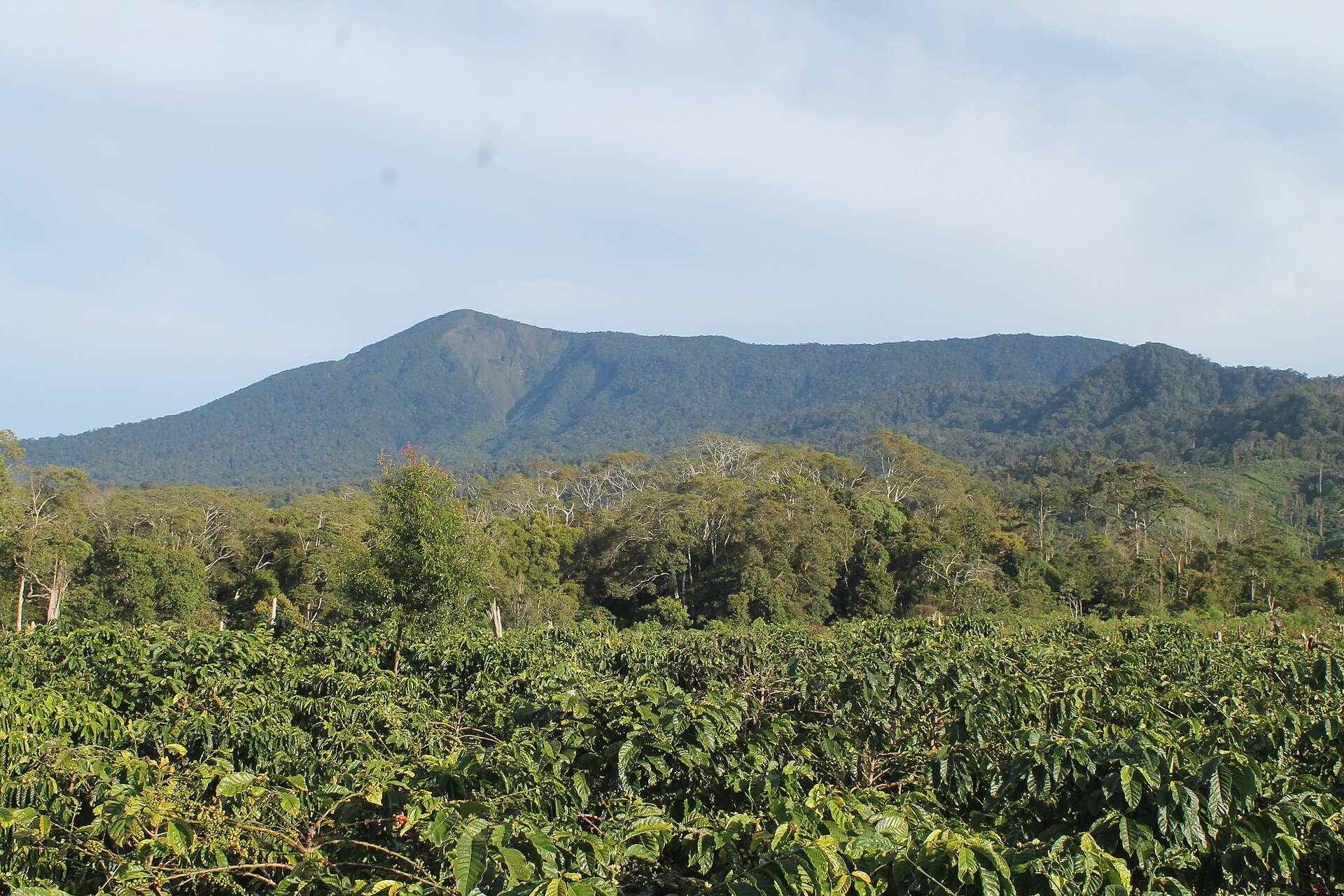
Indonesian arabica is known for a heavy body, low acidity and earthy, cedary flavours, which come mostly from the way much of it is processed. Most of the country's coffee is actually robusta from southern Sumatra, and the arabica you see on specialty menus comes from smaller areas such as Gayo, Lintong, Toraja, Kintamani and Flores, with a little from Java and Papua.
Growing regions
Numbers on the map match the table. Amber is arabica; brown is robusta. The map shows the main coffee provinces. Flores is shown as the whole of East Nusa Tenggara, and Papua as the whole eastern province, though the coffee only grows in parts of each. The robusta is in Lampung, South Sumatra and Bengkulu, where USDA says most of Indonesia's coffee is grown. Source: geoBoundaries gbOpen (PDDL 1.0 / public domain).
Factfile
- Capital
- Jakarta
- Coffee in Indonesian
- Kopi
- Population
- 286 million (World Bank, 2025)
- Production
- 683,000 tonnes / 11.4 million 60-kg bags (USDA, 2026/27)
- Main varieties
- Robusta clones; arabica Typica, Ateng, Gayo, USDA lines
- Typical cup
- Wet-hulled arabica: earth, cedar, low acidity, heavy body. Washed lots are cleaner and rarer.
Region details
| No. | Region | Species | Altitude | Season | Notes |
|---|---|---|---|---|---|
| 1 | Aceh / Gayo | arabica | 1,200–1,700 m | Oct–Jan, Mar–May | Takengon and the Gayo highlands, often organic and often wet-hulled. |
| 2 | North Sumatra | arabica | 1,000–1,600 m | Oct–Jan, Mar–May | Lintong, Mandheling and Sidikalang, the classic wet-hulled cup. |
| 3 | East Java | arabica | 900–1,600 m | May–Sep | The Ijen plateau and its old estates, with some washed lots and a dry-season harvest. |
| 4 | South Sulawesi / Toraja | arabica | 1,100–1,800 m | May–Oct | Tana Toraja and Kalosi, where old Typica still turns up. |
| 5 | Bali | arabica | 1,000–1,600 m | May–Oct | Kintamani, often washed and grown alongside citrus, with subak irrigation. |
| 6 | Flores | arabica | 1,200–1,800 m | May–Sep | Around Bajawa, with a sweet, chocolatey cup and less earthiness than Sumatra. |
| 7 | Papua | arabica | 1,400–2,000 m | May–Sep | Around Wamena in the Baliem valley, a small part of the province. |
| 8 | Lampung | robusta | Low–800 m | May–Sep | Robusta, and one of the largest coffee provinces in the country. |
| 9 | South Sumatra | robusta | Low–900 m | May–Sep | Robusta, which together with Lampung grows most of Indonesia's coffee. |
| 10 | Bengkulu | robusta | Low–900 m | May–Sep | More robusta, on a smaller scale than Lampung. |
Common processes
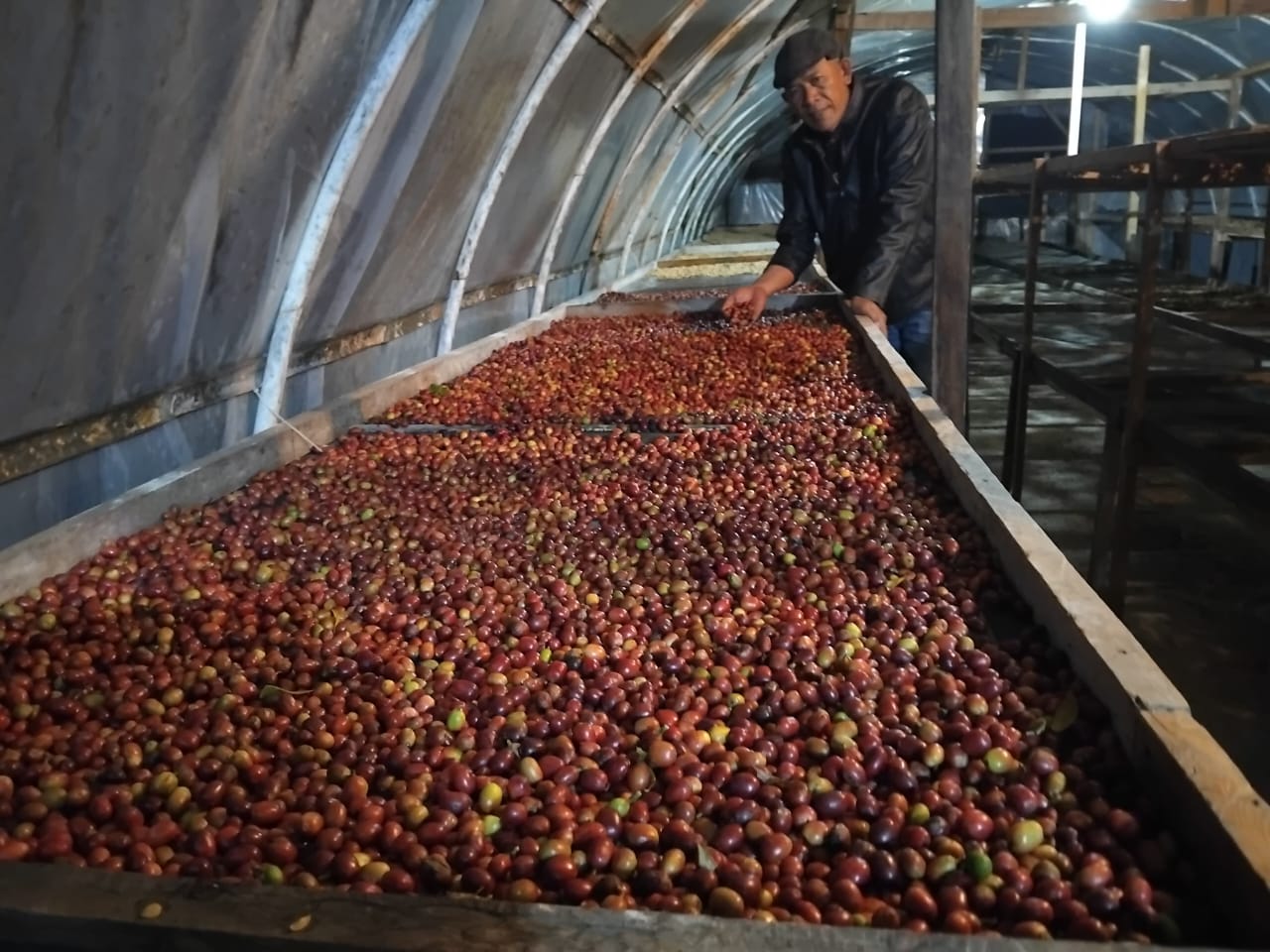
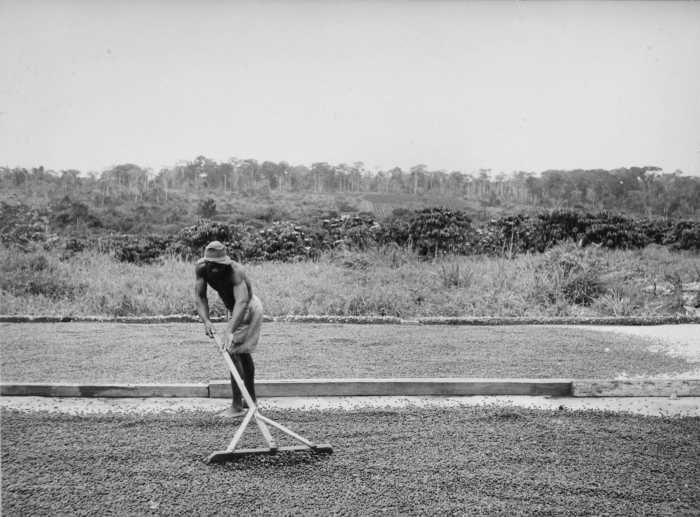
Wet-hulling, or giling basah, is the Sumatran method. The coffee is pulped and then dried to about 30% moisture. The parchment is hulled while it is still wet, and the green bean is dried the rest of the way. It dries faster in a wet climate. It also nicks the bean and leaves that heavy, earthy, low-acid cup people call Mandheling.
I find these coffees quite difficult to enjoy, but they are well liked in Asia and often used in espresso blends to add body. Better examples have slight, high fruity notes blending with the traditional heavy flavours, which can be umami and sweet. Some people treat the earthiness as a defect, but it really comes from the method.
Washed coffee exists, especially on Java, Bali and some Gayo lots. Honey is an experiment, as elsewhere. These can be bright, juicy and delicious.
Robusta is the majority of the crop. USDA's 2026/27 split is about 10 million bags of robusta and 1.4 million of arabica. Instant and espresso blends absorb most of the robusta. Specialty buyers focus on the arabica, which is a much smaller and more interesting part of the harvest.
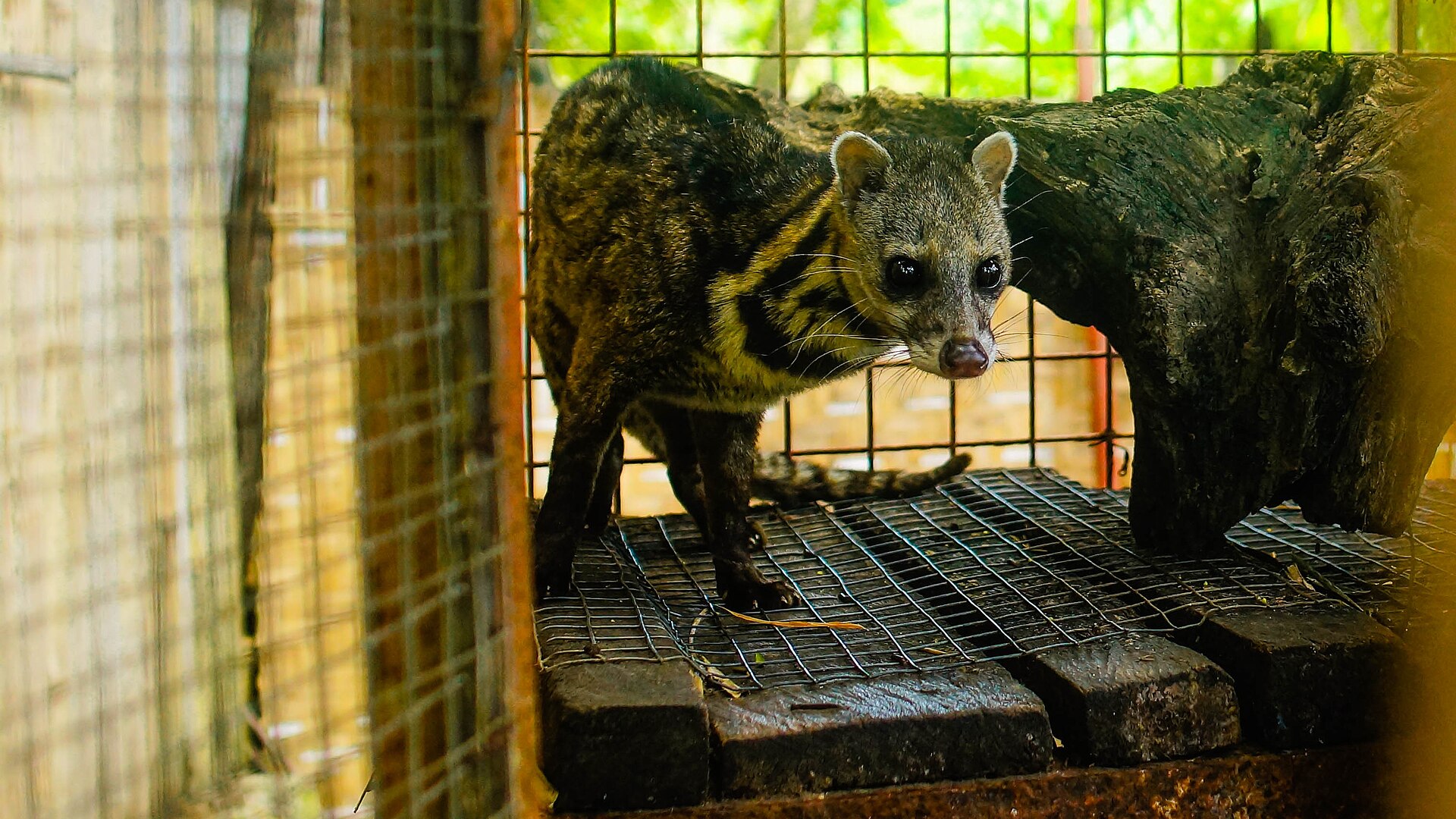
Kopi luwak is where the coffee processing happens inside a civet, usually from caged animals. Don't buy it if you cannot prove it has been sustainably sourced. It isn't the world's best coffee and your money is much better spent buying a more traditional processed bean.
Grading
Indonesian coffee is graded by defects, under the national standard, not by altitude. Grade 1 is the cleanest, with the fewest defects in the sample. Grades 2, 3 and on down are progressively dirtier. On a Sumatra sack, Grade 1 is what you want to see next to the regional name.
The grade does not tell you the coffee was wet-hulled, and it does not tell you it will taste like earth and cedar. A Grade 1 Mandheling and a Grade 1 washed Java are both "good" by the defect count and nothing like each other in the cup. Screen size is sometimes printed as well. Treat it the way you treat AA in Kenya: useful for the roast, not a score.
Historical development
The Dutch East India Company planted arabica on Java in the 1690s. Leaf rust in the 1870s wiped a lot of it out, and robusta was brought in from Africa because it survived. That is why Indonesia is a robusta country with arabica pockets, rather than the other way around.
The trade names stuck: Java, Mandheling, Ankola, Toraja. They are markets and methods more than farm gates. A bag labelled Mandheling is likely to be a wet-hulled blend from North Sumatra, which might be good, but it will not come from one hillside. USDA has production around 11.4 million bags for 2026/27, down on the year before after wet weather in southern Sumatra.
Present-day coffee culture
Kopi tubruk is the everyday brew. Grounds go in a glass, hot water goes on top, you wait, and you drink past the sludge. Kopi jahe adds ginger. Street stalls do this all day, and it is a better introduction to how coffee is actually drunk than a tasting flight in a hotel.
Jakarta, Bandung and Yogyakarta have specialty bars. They roast Gayo and Flores, and they will talk about process in the same way a Melbourne bar would. At home, tubruk still wins. A wet-hulled Lintong is a fairer introduction to what this origin tastes like than anything with a civet on the bag. It will never taste like a Kenya, and it is not trying to.
In the country