29 Sept 2026 · 5 min read
Co-fermented Coffee
By Keiran Jones
Co-fermented coffee is coffee that has been fermented with something else in the tank: fruit, fruit pulp, cacao, cane, sometimes a chosen yeast. It isn’t the same as washing the mucilage off, and it is not the same thing as drying the cherry whole. The idea is to bring the flavour of that extra ingredient into the finished bean.
Fermentation is already part of washed and honey coffee: yeasts and bacteria feed on the sugars in the mucilage and change the cup profile. A natural pushes this further, because the whole cherry dries with the fruit in contact with the seed for weeks. Co-fermentation runs with that idea and adds another food to the mix, such as passion fruit, peach, watermelon or cacao pulp. The hope is a cup where you can taste that ingredient as well as the coffee.
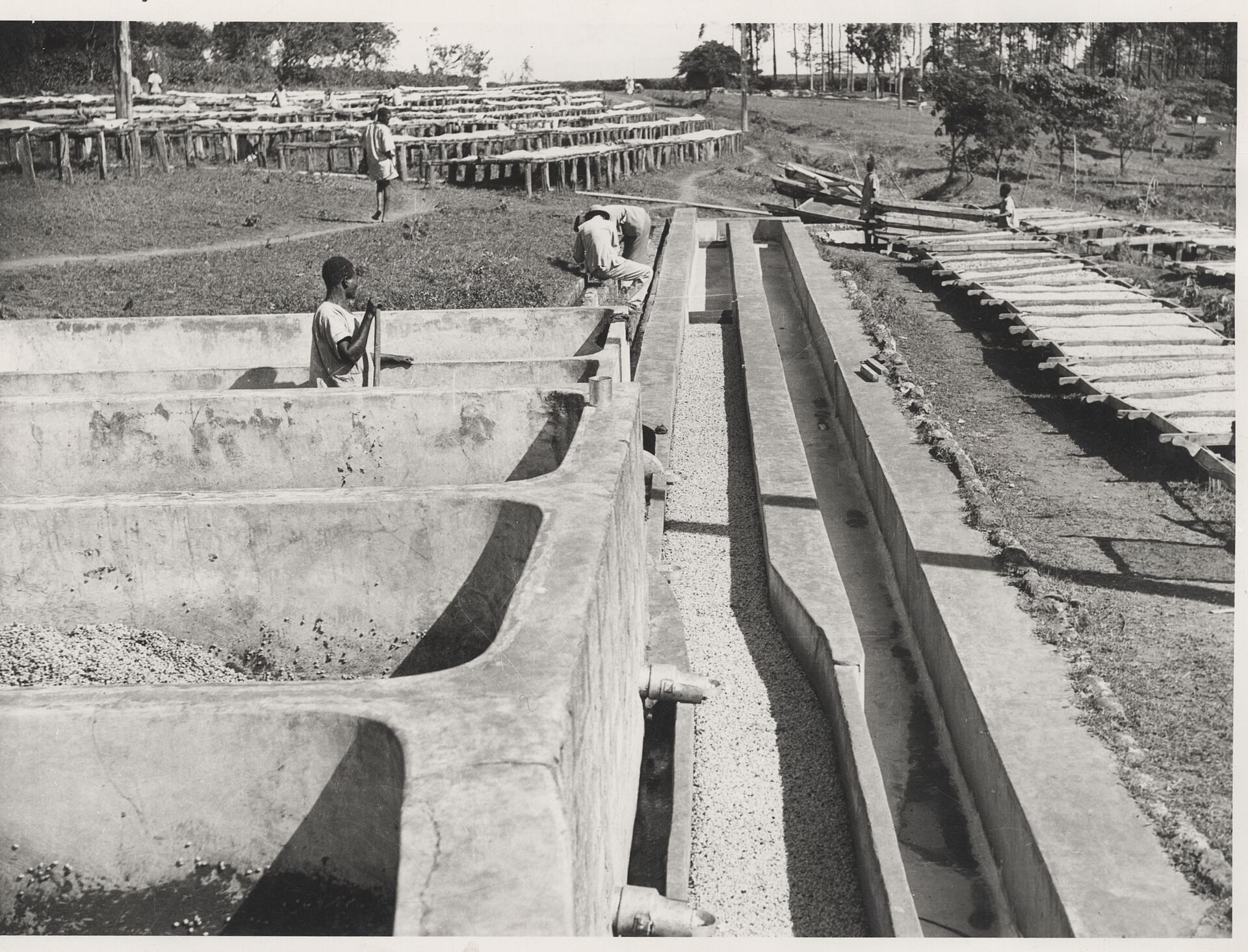
Wet-mill fermentation tanks. Photo: Touring Club Italiano archive / Wikimedia Commons, CC BY-SA 4.0
Why there are so many
Colombia is where much of the experimentation is happening. Part of the reason is economic: farmers are squeezed by costs and unpredictable prices, and a co-ferment can sell for more than a clean washed regional lot. Some fruit ferments began as a way to use fruit that couldn’t be exported. Volumes are still small next to washed Colombian coffee. The extra fruit changes the process too: there’s more sugar in the tank, fermentation runs faster, and a whole batch is easier to spoil. That’s why the good ones cost what they do. You’re paying for the fruit, and for someone keeping a close eye on the tank.
Panama, Costa Rica and Brazil have their own versions, but Colombia is the one you’re most likely to see on a specialty menu right now. Partly that’s because so many farmers there already know how to ferment carefully, and partly because buyers will pay for a cup that tastes of a named fruit. I’ve tried several peach co-ferments this year. They were exciting at first, but I came to find them one-dimensional, and I’ve drifted back to more traditionally processed coffees.

A field fermentation tank. Photo: Michael.C.Wright / Wikimedia Commons, CC BY-SA 4.0
A co-ferment is not an infused coffee
The distinction matters. A co-ferment is meant to be a true fermentation, while an infused coffee can be something much blunter: flavourings added so that the green bean absorbs them.
Perfect Daily Grind put the difference plainly. In a co-ferment or controlled fermentation, yeasts and bacteria consume compounds in the coffee and produce new ones. With an infusion, synthetic chemicals and flavourings can be added, and the bean simply absorbs them.
You can taste it when the process has gone wrong. A careful lot still tastes like coffee, with the fruit sitting in the cup rather than replacing it. A clumsy one tastes like fruit juice, or like a flavouring. 'Fruit bomb' has become both the compliment and the warning.
Synthetic flavourings
Some coffees sold into this boom have reportedly had synthetic flavourings added to the green coffee. Pergamino, working with researchers at Universidad Surcolombiana, said that all 25 co-fermented samples they tested contained propylene glycol, a carrier used in flavourings, while none of the 79 conventionally processed coffees they compared them with did. The work isn’t peer-reviewed yet, and some readers have questioned whether it proves the point for every sample, so it’s better read as a warning sign than a verdict.
Flavour chemist Ennio Cantergiani has published GC-MS work on coffees marketed as co-ferments, and it showed the same kind of fingerprint: propylene glycol, plus flavour molecules used in formulated flavourings rather than in a fruit ferment. Fermented watermelon should taste fermented. A fresh, sweet-shop watermelon note is a different kind of addition.
None of that means a named fruit in a fermentation tank is a trick. It means the word ‘co-ferment’ is being asked to cover two different products, and only one of them is a fermentation.
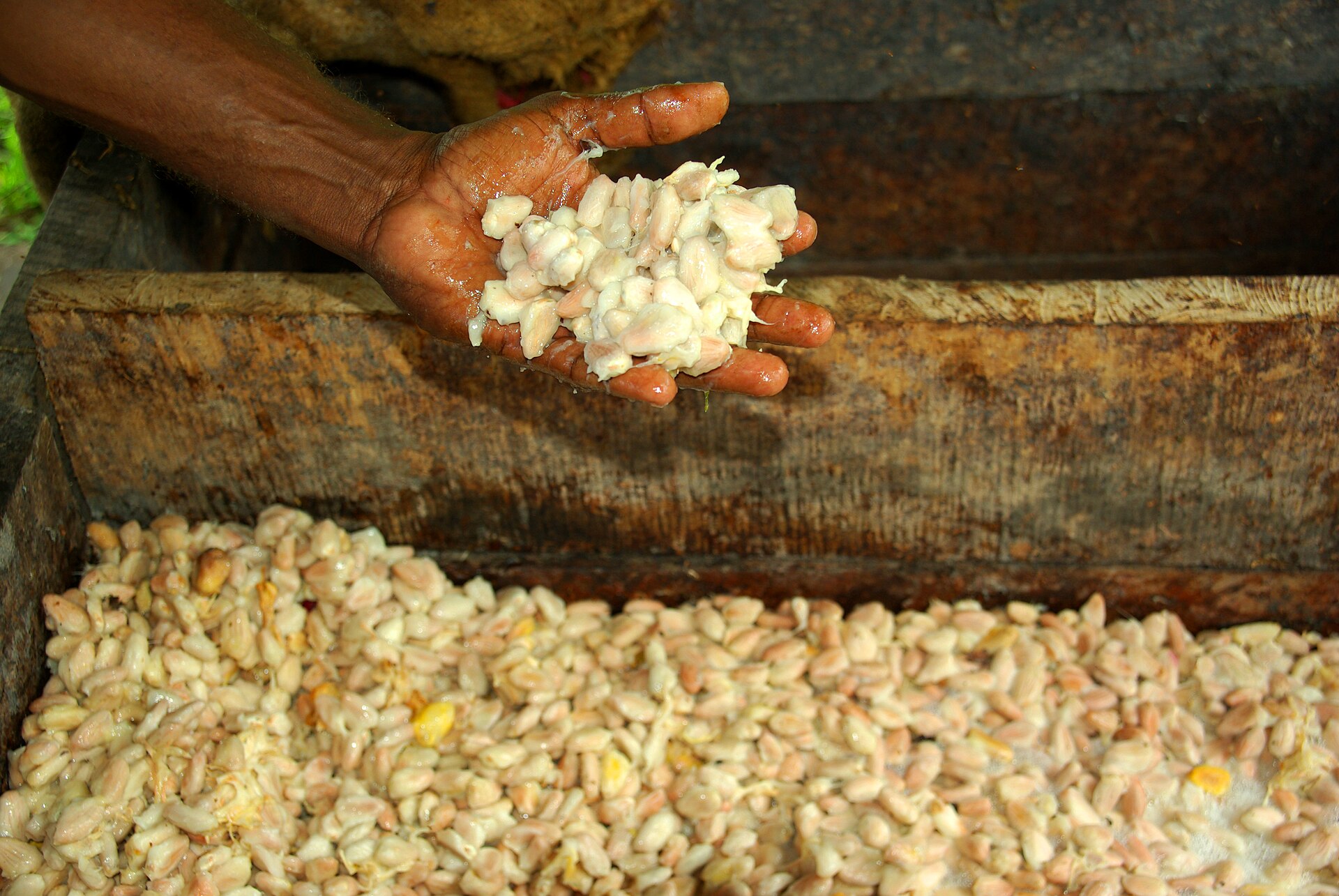
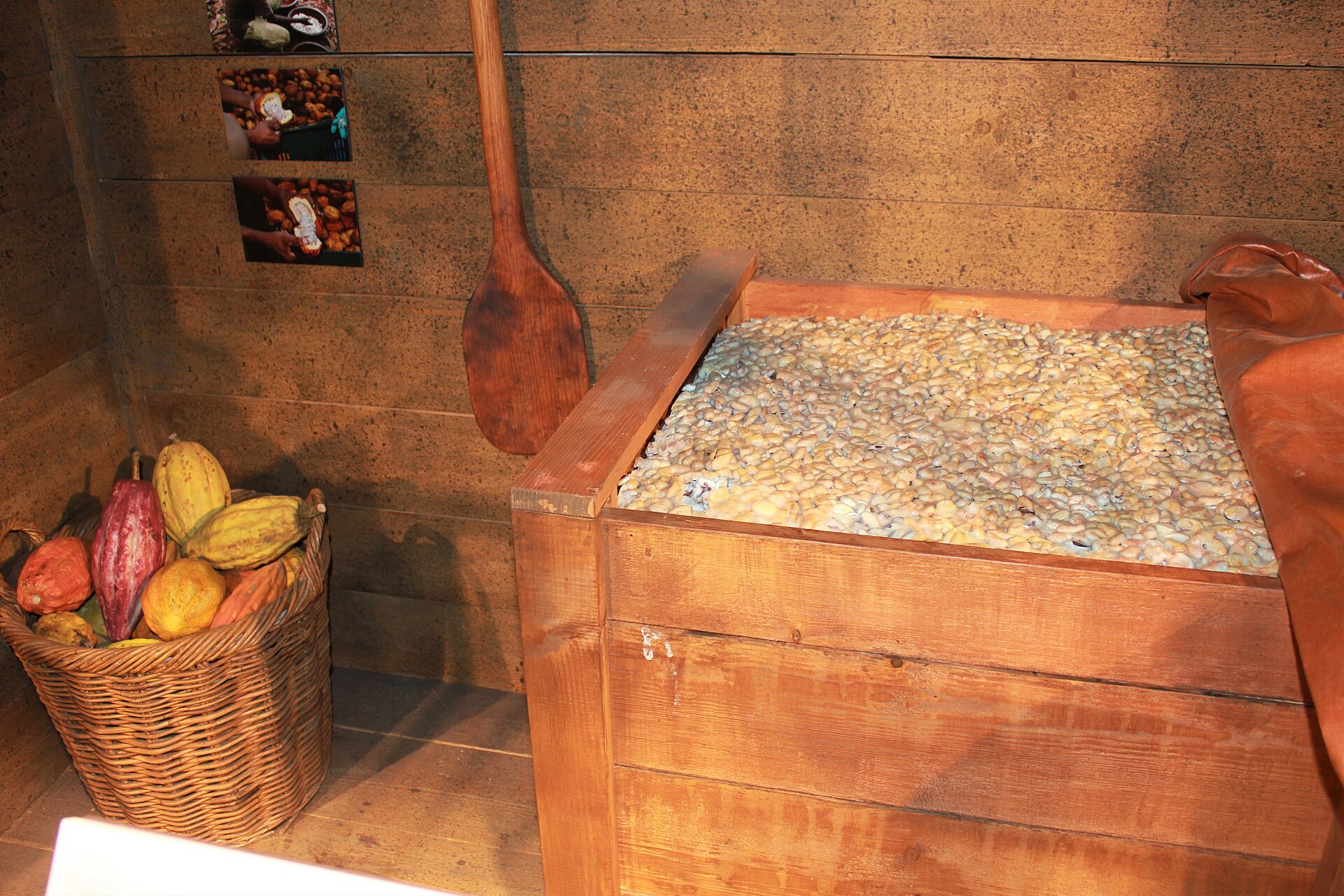
Fermenting cacao pulp — the same kind of extra food some co-ferments add to the tank. Photo: Irene Scott / AusAID / Wikimedia Commons, CC BY 2.0
How to enjoy co-ferments
Treat it as its own drink. Brew it the way you would a juicy natural, a little cooler than a dense washed coffee, and leave the milk out. If you can, taste it next to a washed coffee from the same region. A co-ferment is an extra, not a replacement.
If the roaster won’t say what was added, I’d pass. The interesting ones are proud of their recipe.